Imagecraft
[Imagecraft | Vol. 1, No. 1] An image that changes the story

An image that changes the story
An image becomes structural when its return changes what the reader knows. Begin with something observable: the crack in a cup, the smell of wet wool, a lamp left burning. Let a character handle it before deciding what it means. The reader can discover significance through action.
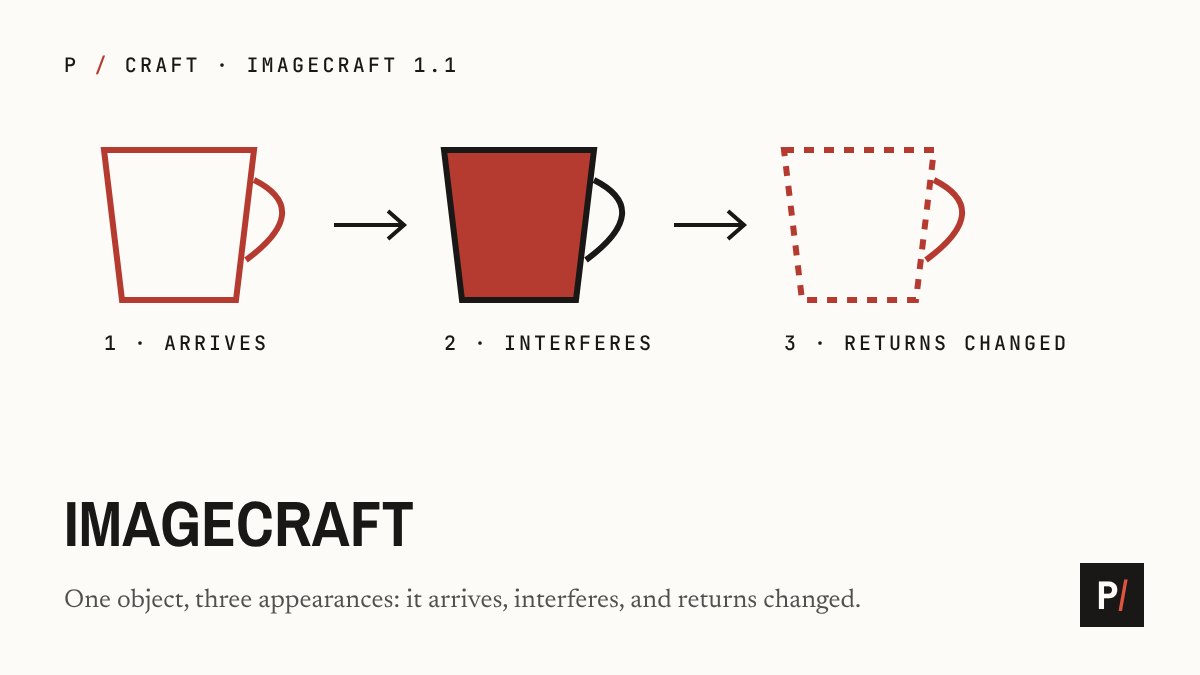
Build a three-stage image score. On its first appearance the object belongs to ordinary life. On its second appearance it interferes with a desire. On its third appearance a changed action gives it a changed meaning. Repetition supplies continuity; variation supplies narrative movement.
Point of view determines which details survive. A caretaker notices weight and breakage; a debtor notices resale value; a child notices what can be hidden inside. Revise an image by changing the observer rather than adding adjectives. Then test the sentence at three distances: observed from outside, noticed by the character, and absorbed into the character’s thinking.
Keep reading · free with a Poetic.ly account
You have read the essay. The experiments & the worksheet are for subscribers, & subscribing is free.
Still inside this post:
- 🧪 3 ways into the work: the motif relay, sentence aperture & the consequence engine
- 📚 Reading room: literature as a craft laboratory
- 📝 Your practice edition: a worksheet for your own scene, with export
A free account takes an email address & about 10 seconds. It also brings you The Letter, our weekly newsletter.