Speechcraft
[Speechcraft | Vol. 1, No. 1] Every line changes the negotiation

Every line changes the negotiation
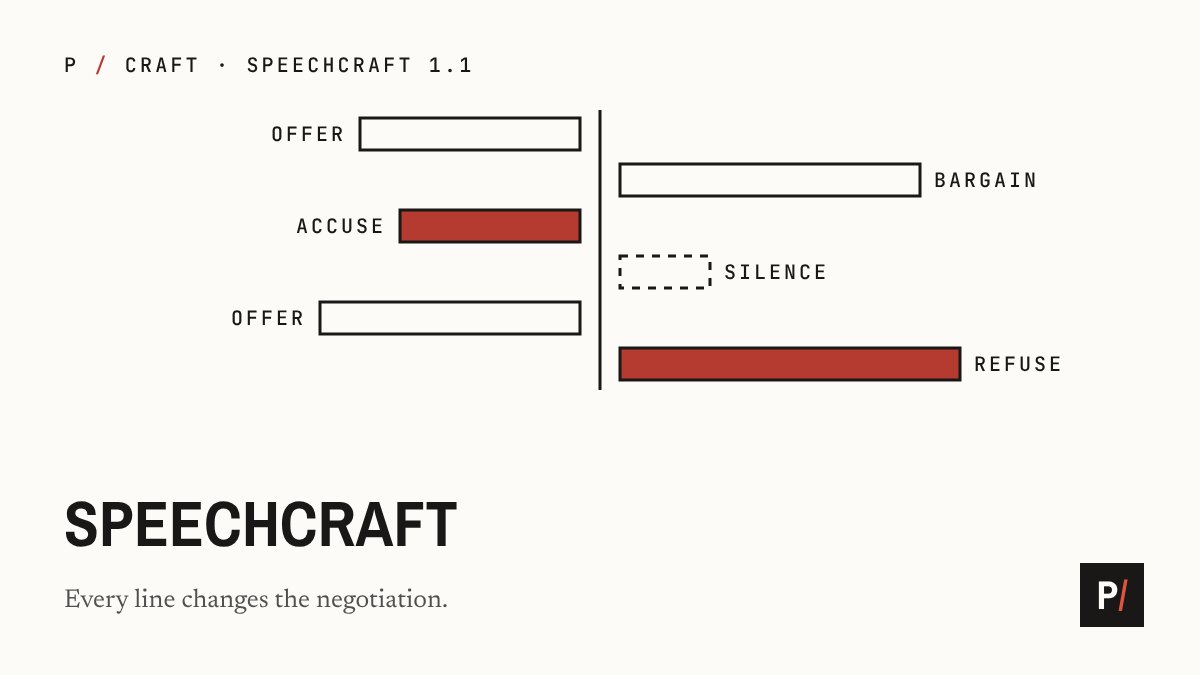
Dialogue has a spoken subject and a practical transaction. Two people can discuss a window while negotiating who gets to leave, & a scene in which they discuss only the window is a weather report with quotation marks. Give each speaker a desire, something they will not admit & a resource the other needs. Choose a speech act (offer, evade, accuse, bargain, disclose) before writing the line.
Track the scene’s balance after each turn. A reply can give information, withhold permission, recruit a witness or force a new question. Silence is an action when it changes another person’s options, which is why the best line in many scenes is the one nobody says. Vary rhythm through interruption, gesture & what the speakers choose to leave incomplete.
Character emerges from the gap between intention & effect. A person who intends reassurance may sound controlling; a person who asks for a trivial object may be seeking recognition. Revise one exchange without adding exposition, exposition being what characters say when their author is nervous: change the verb of action behind a line, then change the reply. Let the resulting event alter the next choice.
Keep reading · free with a Poetic.ly account
You have read the essay. The experiments & the worksheet are for subscribers, & subscribing is free.
Still inside this post:
- 🧪 3 ways into the work: the negotiation table, the witness switch & the consequence engine
- 📚 Reading room: politeness as an instrument, speech beside consciousness, care & control
- 📝 Your practice edition: a worksheet for your own scene, with export
A free account takes an email address & about 10 seconds. It also brings you The Letter, our weekly newsletter.